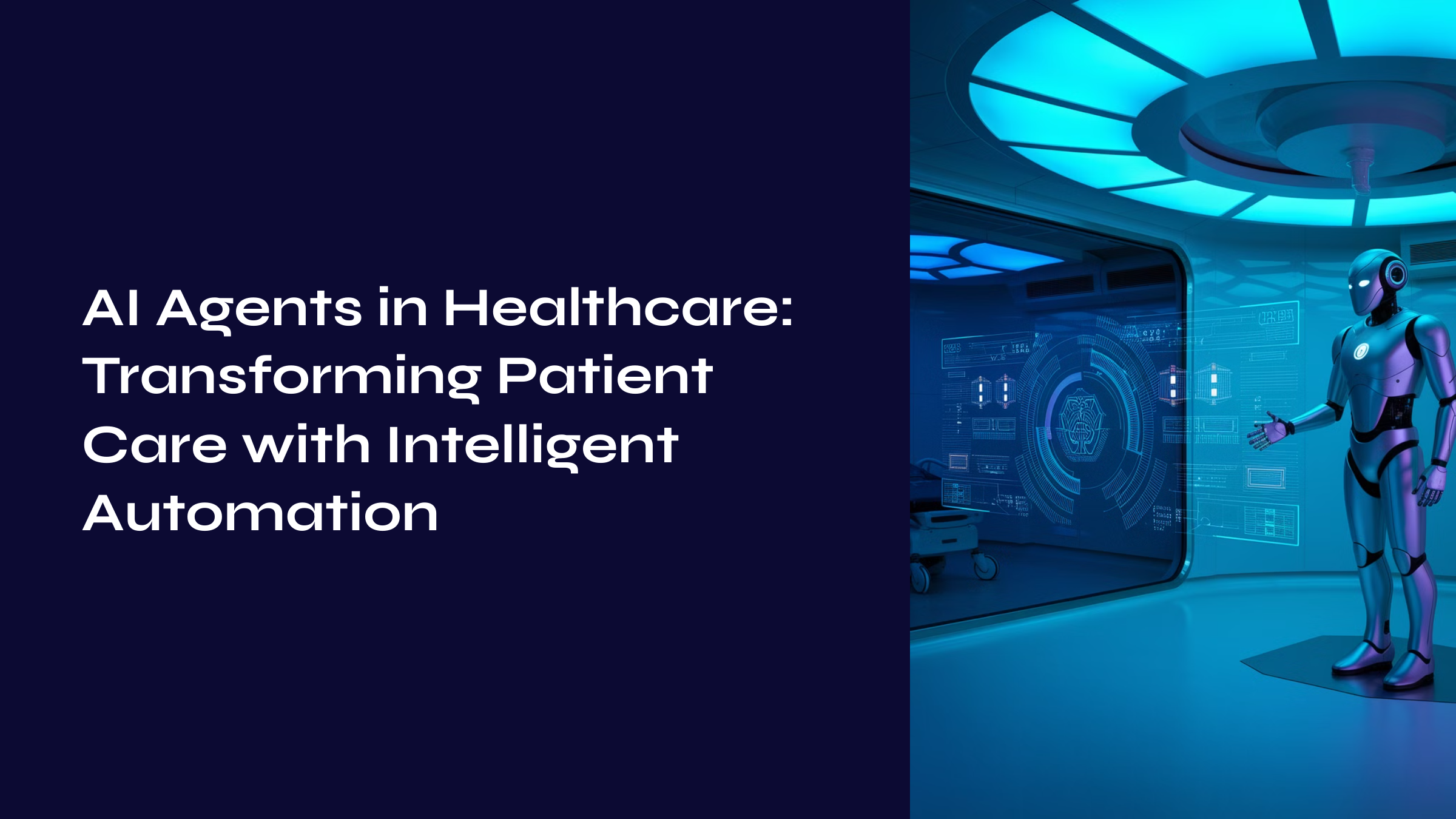
The global AI in healthcare market is projected to reach $188 billion by 2030, growing at a 37% compound annual growth rate (CAGR). This rapid adoption highlights the transformative impact of AI agents in healthcare, from streamlining workflows and enhancing clinical decision-making to optimizing patient care. As a leading AI agent development service provider, advansappz is at the forefront of this transformation, delivering custom AI solutions that help healthcare organizations boost efficiency, reduce costs, and enhance patient experiences.
How AI Agents are Revolutionizing Healthcare
AI agents are more than just automation tools—they are reshaping healthcare by reducing administrative burdens, accelerating medical research, and enabling personalized treatment plans. With AI-driven automation and analytics, healthcare providers can achieve better patient outcomes and operational excellence.
Top 5 AI Agent Applications in Healthcare
1. Clinical Documentation Automation
Clinicians spend significant time on medical documentation, reducing their focus on patient care. AI-powered agents automate this process by extracting and structuring patient data from voice inputs, text notes, and EHRs (Electronic Health Records). Natural language processing (NLP) tools can transcribe doctor-patient conversations into structured records, reducing documentation time by up to 50%. This enhances accuracy, compliance, and operational efficiency.
2. Enhanced Patient Service and Engagement
AI-driven virtual assistants and chatbots address common healthcare challenges like long wait times and staff shortages. These AI-powered tools handle:
- Appointment scheduling
- Answering medical inquiries
- Assisting with facility navigation
- Providing 24/7 patient support
By automating repetitive interactions, AI chatbots improve patient satisfaction, free up healthcare professionals for critical tasks, and enhance overall accessibility.
3. Accelerated Medical Research and Drug Discovery
Developing new drugs traditionally takes 10-15 years and costs billions. AI-powered drug discovery platforms analyze massive datasets, identifying potential drug candidates, predicting disease patterns, and personalizing treatment plans.
4. Advanced Medical Imaging for Early Diagnosis
AI-driven medical imaging enhances radiology by detecting anomalies in scans with high precision. AI agents assist in early disease detection, including:
- Cancer detection (e.g., breast cancer, lung cancer)
- Neurological disorders (e.g., Alzheimer’s, strokes)
- Fracture and musculoskeletal injury identification
Unlike human specialists, AI does not experience fatigue, ensuring consistent accuracy and faster diagnoses.
5. Optimized Clinical Workflows and Data Analysis
Managing vast patient data and optimizing resource allocation is a challenge for healthcare providers. AI-driven predictive analytics forecast patient admission rates, enabling hospitals to:
- Optimize staffing and resources
- Improve patient flow management
- Reduce inefficiencies and operational costs
By automating workflows, AI enhances healthcare efficiency and financial sustainability.
Why Healthcare Organizations Need AI Agents
Key Benefits of AI in Healthcare
- Improved Patient Care: AI-powered diagnostics and predictive analytics support early disease detection.
- Operational Efficiency: AI automation reduces the burden of manual paperwork.
- Cost Savings: Optimized workflows minimize errors and lower operational costs.
- Personalized Medicine: AI enables precision medicine, tailoring treatments to patient-specific genetic and lifestyle factors.
However, successful AI adoption requires overcoming technical and organizational challenges.
Key Challenges in AI Agent Implementation
Technical Considerations
- Integration with Existing Systems: AI must align with EHRs, hospital management systems, and other IT infrastructure.
- Regulatory Compliance: AI systems must comply with HIPAA, GDPR, and other healthcare regulations to protect patient data.
- Model Accuracy & Updates: AI models require continuous learning and updates for optimal accuracy.
Organizational Adaptation
- Staff Training: Medical professionals need AI training to use AI tools effectively.
- Resistance to Change: Clear communication is essential to address AI adoption concerns.
- Ethical Governance: Ensuring fair and unbiased AI models is crucial for equitable healthcare.
How to Successfully Implement AI Agents in Healthcare
Step-by-Step AI Adoption Strategy
Identify High-Impact Use Cases
- Assess areas where AI can bring maximum value (e.g., diagnostics, patient engagement).
- Ensure compatibility with existing IT systems.
Develop a Scalable AI Strategy
- Partner with AI experts like advansappz to create custom AI healthcare solutions.
- Conduct pilot programs to test AI effectiveness before full deployment.
Monitor and Continuously Improve AI Performance
- Regularly evaluate AI tools for accuracy, efficiency, and fairness.
- Address potential biases in AI decision-making.
Foster AI Adoption in Healthcare Teams
- Provide comprehensive AI training for staff.
- Ensure AI augments, not replaces, human expertise.
- Maintain transparency in AI-driven decisions to build trust.
The Future of AI in Healthcare
AI is reshaping healthcare, with future advancements including:
- AI-Driven Predictive Analytics: Forecasting disease outbreaks and patient health trends.
- Robotic Surgery: AI-powered surgical robots assisting in precision-based procedures.
- Wearable AI Devices: Continuous health monitoring through real-time data analysis.
- AI in Mental Health: Virtual therapists providing mental health support and early intervention.
At advansappz, we deliver cutting-edge AI agent solutions tailored for healthcare organizations. By integrating AI, hospitals and clinics can achieve higher efficiency, improved patient care, and competitive advantage.
Ready to transform your healthcare services with AI? Contact advansappz today to explore our AI-powered solutions.
Frequently Asked Questions (FAQs)
1. How can AI agents improve patient outcomes?
AI agents enhance diagnostics, predict disease risks, and personalize treatment plans, leading to earlier interventions and better patient recovery rates.
2. Are AI-powered chatbots reliable for medical inquiries?
Yes, AI-powered chatbots use NLP and machine learning to provide accurate responses. However, complex cases are escalated to human healthcare professionals.
3. What are the biggest challenges in AI adoption in healthcare?
Key challenges include data privacy concerns, system integration, AI model biases, and staff resistance to new technology.
4. Can AI help reduce healthcare costs?
Yes, AI improves operational efficiency, reduces administrative costs, enhances resource allocation, and minimizes diagnostic errors, leading to significant savings.
5. How does AI ensure data privacy in healthcare?
AI solutions comply with regulations like HIPAA and GDPR and use advanced encryption, anonymization, and secure access controls to protect patient data.
Want to integrate AI into your healthcare organization? Let advansappz help you leverage AI-powered automation and analytics for improved patient care. Contact us today!